Vogue
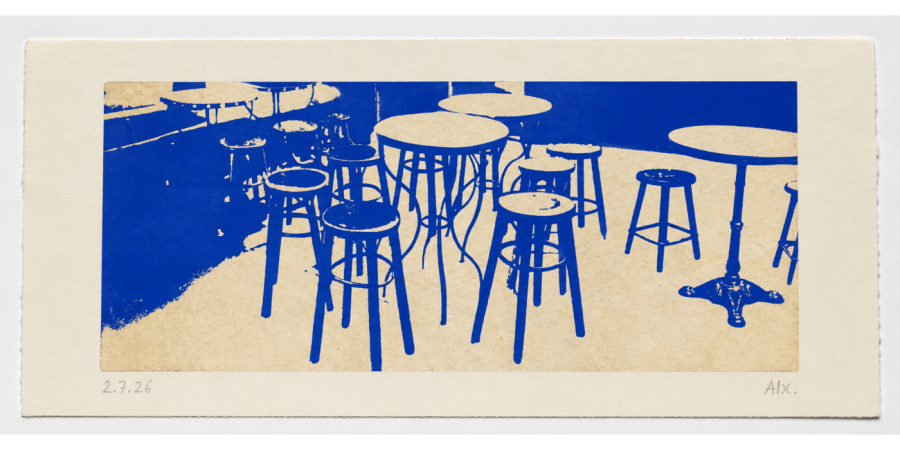
Ashraf Johaardien: A meditation on queer memory: what clubs once transmitted, and what we lose when inheritance becomes information.
I read the list.
Vogue’s 57 Best Queer Movies of All Time. And I find myself asking a question that has very little to do with cinema. What does a culture choose to remember once it no longer has to argue for its own existence? At first I think I’m thinking about films. Then I realise I’m thinking about rooms. Not clubs.
Rooms.
I remember the feeling more than the music. Flashes of sequins catching the light. Cigarette smoke before smoking disappeared indoors. The particular feeling that comes when the crowd has cleared off the dance floor but the music is still playing. When the room has emptied but something remains.
I never wanted to leave. Not because I wanted another drink or another dance. It was because I wanted the night to last forever. It has taken me years to understand that I wasn’t trying to prolong a party. I was trying to remain inside a particular way of belonging.
For my generation of queer South Africans, clubs were never simply places to dance. Their visible purpose was nightlife. Their hidden purpose was transmission. People found lovers there, certainly. They found work. Flatmates. Political allies. Information about doctors who could be trusted. The latest gossip. The safest places to hold hands. Who had died. Who had fallen in love. Who needed somewhere to stay. Which performance was worth seeing. Which protest needed numbers. They were communities disguised as entertainment.
Looking back, what surprises me most is how little anyone actually taught us. The inheritance happened through osmosis. By modelling. By being. By seeing. By being seen. Older queer people rarely sat us down to explain what it meant to live a queer life. They simply occupied the same rooms. We watched them. We watched how they entered a space. How they flirted. How they argued. How they looked after each other. How they survived. We watched the hunt. We learned how to stalk desire. We learned how to recognise danger. We learned how to be prey. It wasn’t always beautiful. Those rooms could be vain, cruel, ecstatic, lonely and gloriously excessive, often within the same hour. But they possessed something social media still struggles to produce. You inherited history simply because someone older happened to be standing beside you at the bar.
Continuity.
South Africa’s queer story is often told as a legal triumph, and rightly so. The Constitution transformed lives. Equality before the law changed what became imaginable. Universities, workplaces, dating apps and social media dispersed queer life across society in ways previous generations could scarcely have imagined. Liberation made dedicated queer spaces less necessary. That was, and remains, a remarkable achievement.
But history has a habit of solving one problem by quietly creating another. As queer life became more distributed, many of the places that once concentrated it began to disappear. Not because queer people disappeared. Because the work those places performed had dispersed. Something subtle was lost.
Today we have extraordinary tools for connection. We can find each other instantly. Algorithms excel at introducing strangers. They are far less interested in introducing descendants. Platforms reward immediacy. Archives require duration. Somewhere between Skyline Bar and the timeline, something shifted.
Where does queer memory live now? Who tells younger queer people about Ramp Divas? Mandy’s? Dungeon? Crew? Legends? Hillbrow before it became shorthand for decline rather than possibility?
Who introduces them to Simon Nkoli, GLOW, the long years of AIDS, to chosen families who became actual families because there was nobody else? Who tells them that this transmission has a choreography of its own, that somewhere else in the world queer elders taught the same lesson through the body, walking a floor, calling it Vogue, and made a house out of the people who had nowhere else to go?
The internet contains information. That isn’t the same thing as inheritance. Inheritance requires presence. Not necessarily physical presence. But some kind of sustained encounter across generations where memory is carried by people rather than merely stored by platforms. Perhaps we’ve reached a new phase of queer liberation. The struggle is no longer simply to be seen. It is to remember. To ensure that those who arrive after us inherit more than rights. That they inherit stories. Names. Ways of recognising one another. Not because the past should be preserved unchanged, but because no culture survives without finding ways to transmit itself.
The clubs were one way. They were never the only way. Perhaps every generation must invent new rooms. New rituals. New places where memory can pass quietly from one life into another.
I think again about the dance floor. The crowd has gone. The lights haven’t come up yet. The music is still playing. For a few suspended moments the room holds everyone who has been there, and everyone who will come after, at the same time. I remember never wanting to leave. Now I wonder if that feeling had less to do with the night than with what existed within it.
Not the dancing.
The inheritance.
Dans.
や Ashraf Johaardien writes under the M\e. imprint. He is Resident Writer at the Fak’ugesi African Digital & Innovation Festival.
Ashraf Johaardien
ashrafjohaardien@me.com
M\e.
http://www.ashrafjohaardien.com
Disclaimer: Artslink.co.za encourages freedom of speech and the expression of diverse views. The views published do not necessarily represent the views of Artslink.co.za.