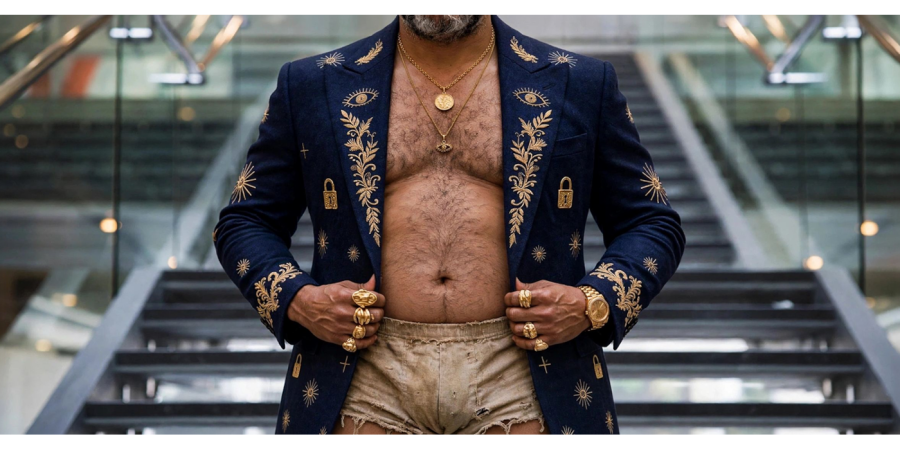
The Emperor’s Schiaparelli Suit
Ashraf Johaardien: Fact, fiction and the half-lie that the creative economy actually benefits artists.
There is something strange about telling creatives they work in a booming industry while many can’t pay rent from creative work alone. The numbers get celebrated. The precarity gets treated as a personal shortcoming.
It works like gaslighting without needing a liar. There’s no single villain here, and most of the people repeating the language of growth and opportunity are precarious themselves. But the effect is the same. A story about the success of the sector becomes a story about the success of the people who work in it. The two aren’t interchangeable. When that story is repeated often enough, a creative worker who can’t make a living from their work can begin to feel that the failure is theirs, rather than evidence of a system that distributes the rewards unevenly.
The South African Cultural Observatory (SACO) estimates that the combined Cultural, Creative and Sports Industries contributed R271.2 billion to South Africa’s GDP in 2023, about 3.9% of the national total. That is a modelled estimate, including direct production as well as the indirect and induced effects across the wider economy. It is a substantial contribution. It doesn’t tell you what an individual artist earns, how secure the work is, or whether anyone can make a living from it.
SACO’s employment analysis offers a different measure. Approximately 374,000 people worked in cultural occupations in 2023, 2.3% of total employment, and that rose to approximately 419,000 in 2024. These figures count people in cultural occupations, including those working outside the cultural industries, not the wider employment the creative economy supports. Earlier SACO mapping, using 2017 data, found that 46% of cultural workers were informal and 34% freelance, compared with 10% freelance outside the cultural sector. The stage is busy. The people backstage are struggling to make a living.
In the old story, nobody can see the clothes. Here everybody can see the suit. It’s Schiaparelli. The tailoring is impeccable. The people who made it are still waiting to be paid.
The 2024 National Visual Arts Review, commissioned by the Department of Sport, Arts and Culture and conducted by Andani Africa, offers a more uncomfortable measure. The median annual income of the artists surveyed is R30,000, or R2,500 a month, a fraction of the average. Forty-five per cent of them spend more on their practice than they earn from it, subsidising it with work outside the arts.
That’s where the passion exploit closes. Miya Tokumitsu nails the mechanism, that when you’re told to do what you love, passion starts to replace pay. The language sounds generous. It suggests that the work itself is its own reward. Apparently, the invoice is where the passion ends. Your unpaid labour becomes their impact report.
Angela McRobbie describes the enterprising self, the creative worker expected to turn personal ambition into a viable business, managing uncertainty as though it were simply another professional skill. The artist becomes a one-person creative industry, with the least profitable department being the art itself.
I have read funding applications from the institutional side, with a limited budget in front of me and more worthy proposals than money to support them. I know how easily the work involved in making an application disappears from the accounting. I know it from the other side too, as an independent publisher with five print-ready manuscripts, five DOIs and five ISBNs. The work exists. The creative labour is complete without me or any of the creatives involved earning a cent yet. My office is in my pocket, on my phone. I work in my study, in coffee shops, on my balcony overlooking the lake. I lose track of time, but the calls of the waterfowl bring me back into the day. Or night. Now comes the part where I try to make each work fit a funding application. The labour is finished long before the application begins, and there’s no guarantee that any of it will be paid.
The Review found that 81% of respondents had never applied for funding. Of those who had applied, only 9% were successful. Access to funding is often discussed as though the opportunity to apply is the same thing as access to support. It’s not. The application itself takes time, skill and resources. An unsuccessful application doesn’t return any of those things.
Then there is the visibility problem. The artists who win awards, secure commissions, get invited to festivals and appear in institutional campaigns are the ones most often seen. Their success is paraded as evidence that the system works. But visibility isn’t a measure of how the rest of the sector lives. A small number of people become highly visible while many others remain economically marginal, often doing work that sustains the very institutions celebrating the sector.
In a 2025 peer-reviewed study of how South African visual artists move between places and markets, Brian J. Hracs, Irma Booyens, Roberta Comunian and Taylor Brydges draw on 30 interviews with 27 artists. Digital tools help artists reach buyers, but building a brand online is constant labour in itself, and unreliable electricity and internet limit the gains. Doing more doesn’t fix precarity. It can deepen it.
Still, the language of opportunity persists. Institutions publish calls for submissions, invite artists to participate, offer exposure and celebrate the contribution of creative work to the economy. The institution knows what it pays. You know what you’re paid. But neither necessarily knows what comparable work is worth elsewhere. What feels like your failure to negotiate is often a system-wide pattern of underpayment that no one can document.
The contradictions are absurd. Art is priceless, but there’s no budget. Creative labour is called an economic asset but treated as a discretionary expense. The work is valued in principle. The artist, apparently, is negotiable.
I have been part of this machinery. I have asked artists to accept less because I’d accepted less myself. I have explained the constraints, made the case for the opportunity, and sometimes treated the artist’s willingness to compromise as evidence of commitment. I know how easily a structural problem becomes a personal negotiation. I also know that understanding the pressure doesn’t absolve me of having helped reproduce it.
None of this means that the creative economy is a fiction. The jobs exist. The contribution to GDP is real. The institutions, festivals, galleries, theatres and production companies generate economic activity. The problem is the half-lie that this activity necessarily benefits the artists whose labour makes it possible.
The answer isn’t another campaign telling artists to become more entrepreneurial, build their networks or improve their visibility. Those things may help some people navigate the system. They don’t repair it.
If public money is going into institutions, publish what they pay artists. Set minimum fees that cover the actual work, including the graft behind the finished product. And measure the money that reaches the people making the work, not just jobs supported or economic activity generated. Exposure isn’t currency. An opportunity isn’t payment. And a good-looking impact report doesn’t settle the invoice.
The creative economy doesn’t become fairer because the sector describes itself as successful. It becomes fairer when the people whose work creates that success can afford to keep doing it.
Otherwise, the emperor gets another suit, the sector gets another award, and the people who made both are still waiting for their line item in the budget.
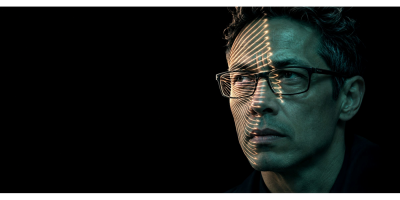
Image: The New Nothing, 2026. Text-to-image synthesis, digital image. 1500 × 700 px.
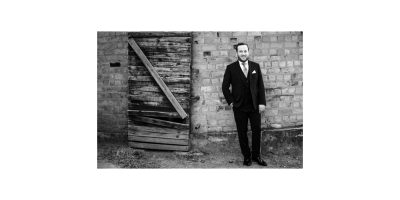
Ashraf Johaardien is a South African writer\artist working across literary, dramatic and visual forms.
Ashraf Johaardien
ashrafjohaardien@me.com
M\e.
http://www.ashrafjohaardien.com
Disclaimer: Artslink.co.za encourages freedom of speech and the expression of diverse views. The views published do not necessarily represent the views of Artslink.co.za.