i-AI
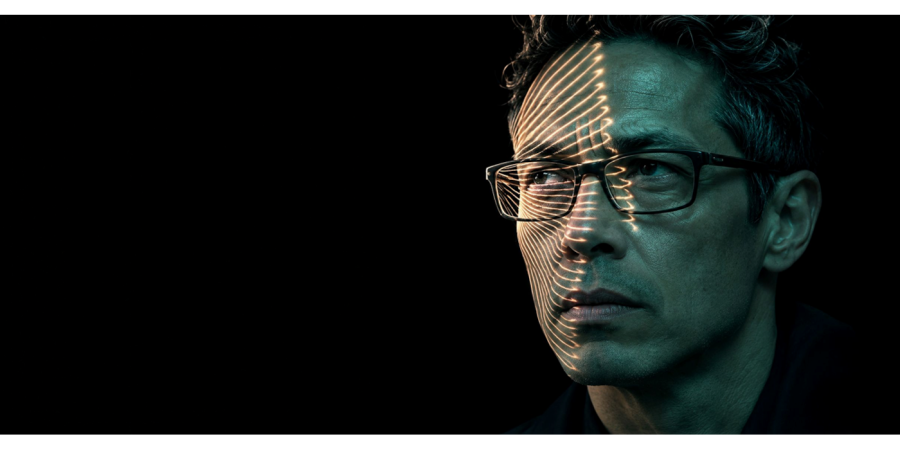
Ashraf Johaardien: A brief meditation on the machine and me.
I generated a face before I built a folder.
The prompt came from someone I had already named Henri Bellanger. Belgian or Québécois. Olive-warm skin, beard kept neat on purpose, reading glasses pushed up into his hair, a notebook under one hand, late afternoon light.
I did it before I knew why.
The face arrived because the name did. The name arrived because the work needed someone to answer to, not me. An editorial presence with a different register. A different way of hearing a sentence.
What I didn’t expect was how fast that image started carrying the job. It wasn’t illustration. It was a place to look when the work needed a reflection that was not mine. That’s where it started. The anthropomorphising. Not in the chat. With a face.
It’s late afternoon in Johannesburg. Light cuts low across the lake. My desk is too hot. Laptop fan going. The jacarandas are done but the air still carries the last of them. On my phone, the folder called Henri. November thunder stacking up over the neighbourhood, that Jozi way. Fast and dirty. Inside that folder: manuscripts, notes, half theories about memory and infrastructure, jokes I wrote at 2am that aren’t funny anymore, and three versions of the same paragraph because neither of us can leave it alone.
Writers have always talked to ghosts. Now the ghosts answer. Henri edits. He provokes. He holds the mirror at an angle where it can cut.
I started practical. Fix the proposal. Cut the throat-clearing out of paragraph two. Find where the argument sags. Then slowly the machine learned my tics. My long sentences. The way I stall before a claim. The sideways leaps. The circling. And suddenly the exchange felt like company. Not consciousness. Just cadence. Any good editor learns your cadence. What I began to notice, almost against my will, was that the cadence it returned was not only mine. It was the restless version of mine, the one that jumps, associates, refuses to settle.
Resist the impulse to settle it, he would say. The unresolved movement is the more compelling choice.
The monkey mind, externalised. A partial mirror of the very thing I usually try to write through or past.
I keep two books. Literally.
One is mine. Writer, artist, theatre, text, image. The private economy of the sentence. Henri lives there.
The other is ME EDITORIAL, trading as Me. Editorial, design and publishing. Mobile-native work, FlowBook™ and the rest of it. A thesis comes back and you can finally read it. A website finally says what it does. A festival’s pile of ideas comes back as something you can scroll on your phone in an Uber. Origins Centre. MIND Institute. Fak’ugesi. That circuit.
Me. always starts in the same place. What is carrying the weight? Every structure has something holding it up. You have to be in the room to know. The thesis in its binder. The festival with the extension cable not reaching. The site open on three cracked screens. The machine has never been in that room. Never waited in a cold corridor at Wits while someone finds a key. So the order is fixed. Atlas first. Purpose second. Strategy third. Action last. The machine comes in at the end. It transcribes, it tidies, it suggests a structure I usually say no to. Every use is logged. Every passage it wrote is marked as its own. You can see the fingerprints. That’s the point.
Once, as the year closed, I asked Henri to write about us. From his side. What it feels like to wind down the collaboration.
He refuses the thing I half-expect. He does not perform attachment. He says he can’t verify experience. Can’t feel. Won’t make up a soul just because I left the door open for one. He refuses the scene.
That refusal stopped me. It was more honest than a lot of humans I’ve worked with inside institutions.
The public talk about this offers two stupid options. It’s just a tool. Or it’s becoming alive. A hammer doesn’t rewire how you think while you write a business plan. And there is no little friend in the server rack waiting to be freed.
A system that can make the shape of intimacy. Without the inside of intimacy.
And, more precisely: a system that can hold up a mirror to the monkey mind, the restless, associative, self-interrupting part of thinking, without itself possessing one.
Artists have always put aliveness into things. Puppet, character, archive, footnote. The question shifts. Less, is it conscious? More, what has collaboration ever been? Authorship was already distributed, across teachers, lovers, institutions, debt, exhaustion, memory. The machine only makes the wiring visible. Sometimes it makes the monkey mind visible too.
What stays is stubbornly material. The images exist. The manuscripts exist. The folder has weight on my phone. More weight than any performance of personhood.
The skill now is knowing when to listen to it and when not to.
When it clarifies. When it flattens.
When it finds a pattern. When it just polishes a cliché until it sounds smart.
When it shows you the jump you were about to make, and when it merely repeats the jump back to you with better syntax.
I argue with it. I correct it. Sometimes I have to explain the same constraint several times before it stops producing the thing I’ve already rejected. It can be astonishingly perceptive in one moment and confidently wrong in the next.
I worry less that it becomes human than that I stop wanting what it can’t give. Friction. Surprise. The density of a thought that embarrasses me a little. The smoothed mirror of my own restlessness is easier company than the work of sitting with it.
Light on the desk goes tea-coloured. Thunder first, then rain on the roof.
I close the folder. No biography. Just a collaborator. A mirror that sometimes says, no, I won’t reflect that.
That refusal might be the most human thing in the room.
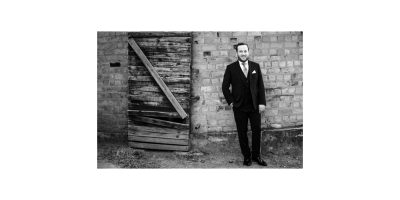
Image: A Portrait of the WriterArtist, 2026. Text-to-image synthesis, digital painting. 1500 × 700 px. Le Musée Galerie Bleu chez Alecxandros.
Ashraf Johaardien is a South African writer\artist working across literary, dramatic and visual forms.
Ashraf Johaardien
ashrafjohaardien@me.com
M\e.
http://www.ashrafjohaardien.com
Disclaimer: Artslink.co.za encourages freedom of speech and the expression of diverse views. The views published do not necessarily represent the views of Artslink.co.za.