Umklomelo Wogesi
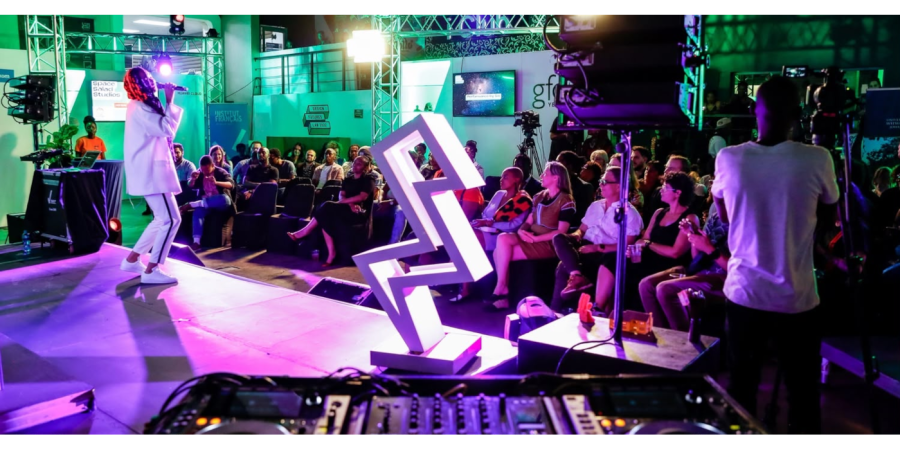
Ashraf Johaardien: Powering the Fak’ugesi Awards 2026.
Umklomelo wogesi: literally, a power award, or an award of power. In the context of Fak’ugesi, the phrase carries the idea of recognition as power: something that marks, amplifies and makes visible what is already happening.
Producing festivals and cultural programmes means spending a great deal of time making other people’s work visible. Awards make that process explicit.
Awards are often treated as harmless cultural decoration. They are not. They decide what gets noticed. They establish categories. They create reputations. Over time, they contribute to the history of a field.
Almost three decades of producing and writing for awards, among them the Arts and Culture Trust Awards, the Standard Bank Young Artist Awards and the Ovation Awards, has made one thing clear to me: the ceremony is never only the ceremony. The recognition travels further than the evening itself. Many awards I have written for or about arrive after the work is finished and exhibited, released, performed or published, and the jury decides whether it has reached a certain standard. Others, like the Standard Bank Young Artist Awards, put the recognition into a grant to make something new.
The Fak’ugesi Awards sit closer to that second kind, and go a step further. This year’s Awards recognise African digital creativity across six areas of practice: Animation, Video Games, Immersive Media, Digital Art, Design and Cross-Sector Music. The range itself is revealing. Digital practice does not necessarily respect the boundaries that cultural institutions have traditionally drawn around disciplines. A project can move between art and technology, music and games, design and performance, research and entertainment. The Awards have to make room for that. The structure is also a map, and maps are never neutral: deciding what to name, what to separate and what to bring together shapes how a field understands itself.
Fak’ugesi has also chosen not to restrict recognition to fully completed projects. The 2026 Awards allow prototypes and early-stage work, with emphasis on a compelling minimum viable product and work that has the potential to expand the field.
That changes the nature of the award. The question becomes less about arrival and more about possibility. What is already happening that deserves attention? What might this work become? That feels right for this year’s theme, African Imaginaries.
The festival’s three frequencies, Memory Engines, Imagination Engines and Future Engines, ask how we carry knowledge forward, how we generate new possibilities and how those possibilities become part of the present. The Awards are part of that conversation, and they do practical work too: they put names and projects into the public record.
Festival Director Alby Michaels brings serious awards experience to that work. He has directed the UJ Dignitas Awards and, for several years, the Naledi Theatre Awards, as well as awards ceremonies in Cape Town, including a virtual ceremony across Iziko museum sites and another live and streamed from Zeitz MOCAA, amongst others. As part of my Fak’ugesi residency, I have worked with his vision, developing the editorial and campaign language that now feeds into this year’s ceremony script. The task has been less about inventing a proposition than finding the language to carry one.
African digital creativity does not need another exercise in proving that the continent can produce work at an international standard. That argument has been made often enough. The more interesting question is what practitioners are doing because they are working here, within particular histories, economies, technologies, communities and conditions. The Awards recognise that work at a moment of emergence.
The new Festival Director’s Award makes room for a contribution that no single category or project can hold. That interests me because recognition has always been one of the less visible forms of cultural infrastructure.
Producing a festival means making choices about what audiences will encounter. An awards platform makes that choice explicit. It says: look here.
What happens when an award recognises a prototype? When the work does not fit comfortably into one discipline? When the thing being recognised is not a finished object, but a new way of working? Those questions are closer to the reality of digital creativity in Africa right now.
On 17 October, the Fak’ugesi Awards close the 2026 festival at the Wits Anglo American Digital Dome in Johannesburg. The ceremony is by invitation and will be streamed live; watch the Fak’ugesi Festival page on Facebook for details on the stream. There will be the familiar elements: nominees, winners, presenters, speeches, applause. Underneath them is a more productive function.
The Awards help establish a record of what African digital creativity looks like at this moment. That record will change. The categories will change. The technology will change. The work will change.
That is exactly why it is worth making the record now.
Ashraf Johaardien is the Writer in Residence at the Fak’ugesi African Digital & Innovation Festival 2026. His views are his own and do not represent those of the festival or its partners.
Ashraf Johaardien
ashrafjohaardien@me.com
M\e. Creative
https://fakugesi.co.za/
Disclaimer: Artslink.co.za encourages freedom of speech and the expression of diverse views. The views published do not necessarily represent the views of Artslink.co.za.