Remembering and Forgetting
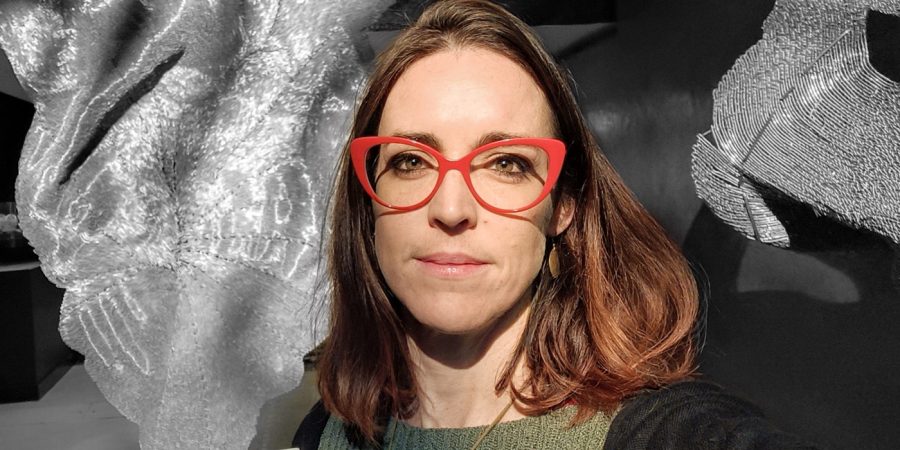
Ashraf Johaardien: Inside the Archive. A museum is a list of decisions. And some of the quietest are made in storage.
Today the festival opens.
From the inside I know my way around this moment. The moments that came before. The ones that follow.
Up close, curating is an exacting discipline. Pieces are set beside one another until they converse, and then past conversation, until each one speaks and holds the thesis in its body.
Most of what goes into it will never be archived: the corrections, the proofs, the file renamed and renamed again. The writing alongside it has become a small record of that, the ordinary and the everyday, which rarely finds a shelf anywhere.
I have driven past the Origins Centre for nearly as long as I have lived in Johannesburg. In the early years it was on my way to park at Senate House and on my way to work at the Wits Theatres. Now it’s on my way to the Fak’ugesi Engine at Tshimologong. Same building, same hill, a different chapter of driving past. The square sign says MORE THAN A MUSEUM, and for years I read it at speed.
Arriving is slower. You leave the paved campus and the hard Johannesburg sun. The light drops, and the concrete cools. The rock art is what stops me every time, the whole archive from the Rock Art Research Institute, and I have never gone in for anything else.
Dr Tammy Hodgskiss Reynard heads the Origins Centre at Wits. She is an archaeologist and an ochre researcher, and when I ask her who decided what the centre keeps, she does not give me a name. She gives me a crowd.
“Origins Centre was shaped by many hands: researchers, heritage practitioners, artists and descendant community members.”
It opened in 2006 and now sits within the Wits Science Faculty. The mission has widened since, she says, into research projects and science communication. The sign over the road is her thesis in four words. The centre is not only about how we became human. It is about “what makes us human”.
Then she answers a question I asked about memory with a sentence about the storeroom.
“Every choice about what goes on display and what stays in storage decides which memories survive or are given value.”
I go for the rock art. It had not occurred to me that the rooms I never enter are making an argument too. She spells out the cost of getting it wrong.
“If a museum fails this, stories narrow, voices are silenced and the past hardens into one version.”
Her remedy is not preservation. It is motion. A museum “should always be evolving”, she says, as understandings of the past change, and at Origins that means temporary exhibitions, lectures, workshops and family events.
Tammy says the memories and moments a museum holds are “always changing depending on who is viewing them and how we connect with them”. I take that to mean a collection can be preserved and still be made absent. An object may survive in perfect condition and stay beyond the reach of the people it might mean something to. The museum’s work is not only to keep things from disappearing. It is to keep open the possibility that what has been kept might still speak differently.
I ask her for one object that changes how a visitor thinks about who invented what, and she declines to choose. She points instead to the large embroidered panels, and to the first peoples of southern Africa, the San hunter-gatherers. She hopes visitors leave impressed by “their intimate knowledge of land, plants and animals and how these are all connected cosmologically.”
Her own subject is smaller than a panel and older than most arguments about it.
“I believe everyone needs a little ochre in their life!”
Ochre, mostly red, was “collected for more than 500,000 years in southern Africa, even before anatomically modern Homo sapiens”. It has been used in ritual, on skin, in the glue that binds a stone tool to its handle, and even as a nutritional supplement.
“So ochre is not just a pigment, it’s a simple rock that carries a deep human story.”
She is open about the limits of technology. The centre has an augmented reality app, and she likes what it does.
“I love how engagement with a giraffe or zebra on the app can ignite the spark for a child to learn more and explore more.”
But she rates the tactile and hands-on interactions highest: holding a stone tool, making ochre paint. What she wants kept is a connection.
“What’s important to me is that the connection to real objects and people isn’t lost.”
For the museum of 2050 she asks first for the long record. Wits curates “an amazing and vast fossil collection”, she says, and it should be “made available to the public”. She wants Africa’s long fossil record in view, “from the first single celled organisms and fossil plants to dinosaurs and therapsids”.
Molemo Moiloa said in a 2024 keynote that humans make memories, not places. Tammy Hodgskiss Reynard runs a place, and asks that it not lose “real objects and people”. I do not think they are arguing. I do not yet know where they meet.
She speaks on Wednesday 14 October at 09:15, at the Origins Centre, as part of Memory Engines.
The room I would like to hear about is the storeroom.
Ashraf Johaardien is the Writer-in-Residence at the Fak’ugesi African Digital & Innovation Festival 2026. His views are his own and do not represent those of the festival or its partners.
Ashraf Johaardien
ashrafjohaardien@me.com
M\e. Creative
http://www.fakugesi.co.za
Disclaimer: Artslink.co.za encourages freedom of speech and the expression of diverse views. The views published do not necessarily represent the views of Artslink.co.za.