The Infrastructure of Forgetting
Ashraf Johaardien: A brief meditation on the protests, the early closure of Art Basel Paris, and who the infrastructure remembers when it closes.
It’s published.
I repost the Art Basel piece I’ve just written to my feed and almost immediately the algorithm floods me. Hyperallergic runs Au Revoir, Art Basel Paris. The New York Times runs Lavish Art Basel Paris Under Shadow of Protests. Artforum runs Fondation Louis Vuitton Shutters as Protests Loom.
Is it news?
Does it matter?
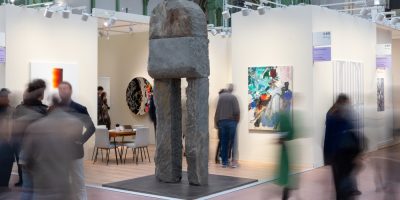
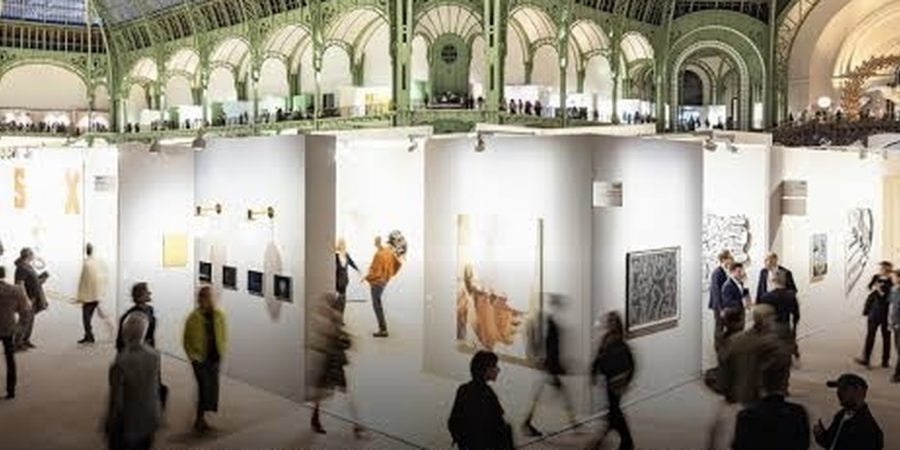
Art Basel Paris was scheduled to run until Sunday. It seems yesterday the organisers announced that it would end on Friday evening, two days early, in the interest of safeguarding our visitors, exhibitors, partners, staff and artworks. It is careful about what it protects and says less about what it leaves out.
The organisers told exhibitors they were responding to demonstrations expected over the weekend. Galerie describes the context as the worst rioting in years, over education and the cost of living. FTN, working from the same announcement, gives no causes, triggers or scale. Galerie supplies a wider context. A demonstration that has not happened can be planned for, and planning is what the fair can communicate.
The protests did not begin on the weekend. The reporting traces the protests to mid-September, when students at a high school in Créteil objected to crumbling buildings, overcrowded classrooms and teacher shortages. Social media calls revived the yellow vest movement. Teachers, parents, nurses and the CGT union joined. Al Jazeera reports the CGT’s demands as higher wages and pensions, lower prices and the protection of public services. On October 17 the authorities counted 550,000 people across France, 110,000 of them in Paris, and reported at least 400 arrests. The Interior Ministry blamed the ultra-left. President Macron appealed for calm and said the right to protest comes with a need to respect people and property.
That same week the fair’s installation was locked down. Exhibitors were told to keep their presentations up and wait for instructions. I have no evidence anyone at the fair drew a line between those two events, and I won’t draw it for them. What I can see is the distance between the two vocabularies. The fair spoke of risk to property and visitors. The street spoke of what it costs to study, rent, teach and rely on a public service that works. Most of the people who make the fair possible live inside the second vocabulary.
In the first days, Hauser & Wirth sold paintings by Gerhard Richter and Georg Baselitz, both from 1965, for about $10 million each. David Zwirner found buyers for works by Richter, Robert Ryman and Joan Mitchell at $8.5 million, $4 million and $3.8 million. A dealer said most key collectors had come. The safety message and the sales message ran on the same page. Each measured a different kind of success.
Here the 1% stops being a figure and becomes a question of visibility. The concentration I can see is not only how much money moves, but which artists, galleries and transactions receive the infrastructure that makes them visible. A few mega-galleries decide which artists circulate through the fairs and museums. I hold this as a premise, not a finding. The transactions are real, but they cannot show how the artists who teach, apply for grants and take other work make a living, because the fair does not count them.
The loss that gets named is economic. Paulson Fabricant, an art adviser, called the early closure tragic for organisers and exhibitors and said it would have a deleterious effect on the fair. The loss to people who bought weekend tickets is harder to locate. FTN reports that they lose two of the three public days, and that no refund arrangement could be verified when it published. Nobody in these sources counts that as a loss to the fair. It sits outside the measures of success the reporting makes visible.
Outside the Grand Palais, Alicja Kwade’s stone sphere, L’Élévation des Mondes, is being dismantled with the other works on Avenue Winston Churchill. Kwade says the decision was joint, made with the organisers, and that she would have preferred it to stay. Public art is made for people, she told Ocula. Her earlier Instagram post attributed the removal to people who simply want to resort to violence.
Read as a signal rather than a case, the closure may show an old arrangement beginning to strain. The fair’s infrastructure depended on a stable world: collectors who travel, weekends that can be sold, and a public calm that lets the sales run on schedule. Each of those is now visibly contingent. Protests about schools and rent reach the rooms where the market measures itself.
This is where the older question returns. Forgetting does not need a decision to erase. Nobody has decided that the public should lose a sculpture or a weekend. The decision is safety, which is defensible. When the catalogue went out of print, I helped make a decision that could be defended on cost and reach. When this fair closed early, its justification sat in the same register: a choice the system could defend on its own terms. I don’t think either was a villainous act. The useful question is who the infrastructure remembers when it closes, and who it has no line for.
Notes from the Season is the form that keeps observing through time, because a closure is a fact on Friday and a pattern by November. It makes room for sentences that don’t resolve. I’ve got RuPaul’s old line stuck in my head. Losing is the New Winning. It’s not playing at the Nest and I don’t even watch Drag Race anymore. Not since winning started to look like losing.
That’s the double vision I’m sitting with: what the fair calls success and what the street calls loss are measured differently, and I’m trying to read both without the right lenses.
Ashraf Johaardien
ashrafjohaardien@me.com
M\e.
https://me-editorial.crd.co/
Disclaimer: Artslink.co.za encourages freedom of speech and the expression of diverse views. The views published do not necessarily represent the views of Artslink.co.za.