Ambulomyopia
Ashraf Johaardien: A brief meditation on art, visibility and what we keep.
My multifocals are missing.
Losing is the New Winning plays quietly from my Google Nest. The lyrics hit differently as I try to navigate the day in my driving spectacles.
Not really succeeding.
End-of-year admin. Scanning the files I’ve accumulated, I find the gallery list announcement from Art Basel 2026 in my pitches folder. It arrived in February. None months ago. I filed it without marking the dates.
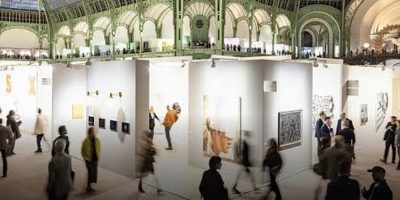
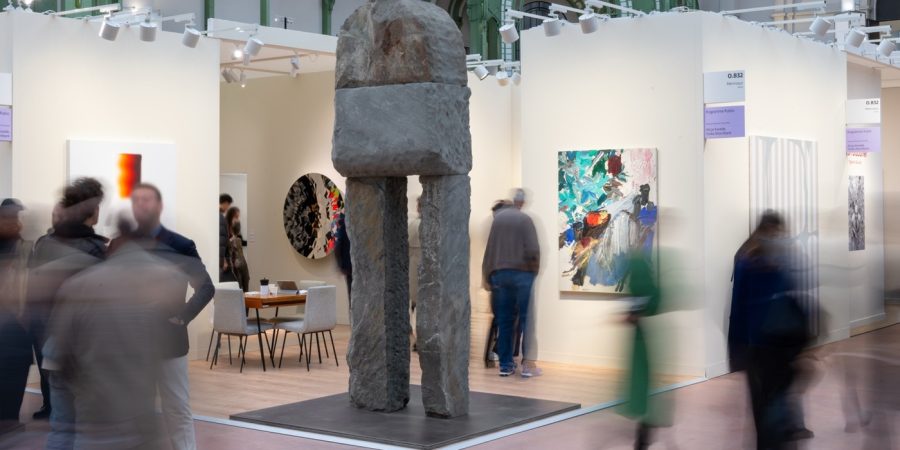
The fair is happening right now. 290 galleries. Forty-three countries and territories. Ninety thousand visitors reported to have moved through Messe Basel in those five days. This arrives as data, distant and dimensionless.
A yellow sticky note marks something in the Art Basel and UBS Art Market Report 2026 I have retrieved. The page is less interesting than what I’ve written on the note: The global art market grew 4% to $59.6 billion in 2025. I don’t remember writing it.
Of course.
Those are the figures that move through the press release. They arrive in inboxes as justification. Art Basel measures itself not simply as a cultural incubator, but as the most closely watched annual moment in the international art market.
I think of the printed fair catalogue. They stopped publishing it after the 2020 edition, which marked the fair’s 50th anniversary. That catalogue was substantial, 656 pages hardcover, the weight of institutional commitment. I still have my copy. I scan my bookshelves looking for it. I need to hold something from a person or a place to find the vibes I need when I write.
The catalogue is not where I remember it. I pull the 2020 edition from another shelf. The object itself arrives with texture. Paper stock. Typography. Advertisements. Gallery pages arranged in a logic that assumes a reader moving sequentially through decisions. I remember designing printed catalogues for three decades. I remember the transition meetings. The cost analyses. The pivot from print to digital that happened across institutions because needs must and budgets had to be cut, not because of any pioneering spirit. I settle for the PDF.
I peel through the pages of catalogues I have contributed to and collected over thirty years. The paper. The density of it. Smaller institutions made these, curatorial teams with different money, different constraints. They sat heavier in people’s hands than global market metrics ever will.
I feel sad. Also grateful.
In many of the rooms I have moved through, I led that pivot. Each time the same conversation. Each time the same decision. The move away from the tactile infrastructure toward the screen. The loss, yes. But the pragmatism too, and that’s what I’m grateful for now.
We were making decisions about budgets, reach, access. The digital version could travel further, cost less to reproduce, remain available after the event. These were not bad reasons. They were often the only reasons that could survive the meeting. What was harder to account for was the catalogue as an object, something made to be handled, kept, returned to. There was no line for that in the cost analysis.
The vibes I need are not in the $59.6 billion. The vibes are in the material residue of how cultural authority gets structured across time.
I make a little pile on my desk. Years of publications. Programmes. Season brochures. Guides from institutions where I first learned to think about publishing as curatorial practice. The pile is not so little. The satisfaction is immediate. These sit in the gap between what Art Basel measures and what I hold.
Art Basel’s infrastructure is one way of determining what becomes visible, legible, and valuable in the art world. Not the only way. But the most watched. The catalogue, now deleted from production, was never the fair’s central infrastructure. The real infrastructure is the relationship between galleries (290 of them), collectors (represented across 103 countries), dealers (the hierarchy: Hauser & Wirth with the Picasso at $35 million, Thaddaeus Ropac with the Soulages around $3 million, Gagosian with the de Kooning, GRAY with the Hockney at $8.5 million), and the market that measures all of this in real time. This is the apparatus of visibility. The lenses through which the 1% of transactions become vivid while the rest remains peripheral. Ambulomyopia: one eye fixed on the transaction, the other unable to focus on where most artistic practice unfolds.
What appears instead of the printed catalogue is digital. The online database. The preview list. The sales reports. Ruba Katrib curated Unlimited with 59 projects. Stefanie Hessler organized Parcours under Conviviality. Zero 10 made its European debut. These are ambitious presentations. But they distribute refined attention to work already positioned. They operate within the concentration, not against it. The success of the fair is legible through sales. It has to be.
This is where the M\e. practice forms enter the picture. Notes from the Season. Notes from the Labyrinth. Ask M\e. Provenance. Artslink essays. These publication forms organise attention differently. Depth of inquiry, maybe. Duration of attention. They circulate among smaller audiences, with different metrics of success. They create conditions for work that does not have to become immediately legible as market value.
Art Basel and these smaller publications are not competitors. They operate under different conditions of visibility.
What gets measured.
What remains unmeasured.
The pile will stay on my desk for now.
Image credit: Art Basel 2026
Ashraf Johaardien is a South African writer\artist working across literary, dramatic and visual forms.
Ashraf Johaardien
ashrafjohaardien@me.com
M\e.
https://me-editorial.crd.co/
Disclaimer: Artslink.co.za encourages freedom of speech and the expression of diverse views. The views published do not necessarily represent the views of Artslink.co.za.