Face à la mer
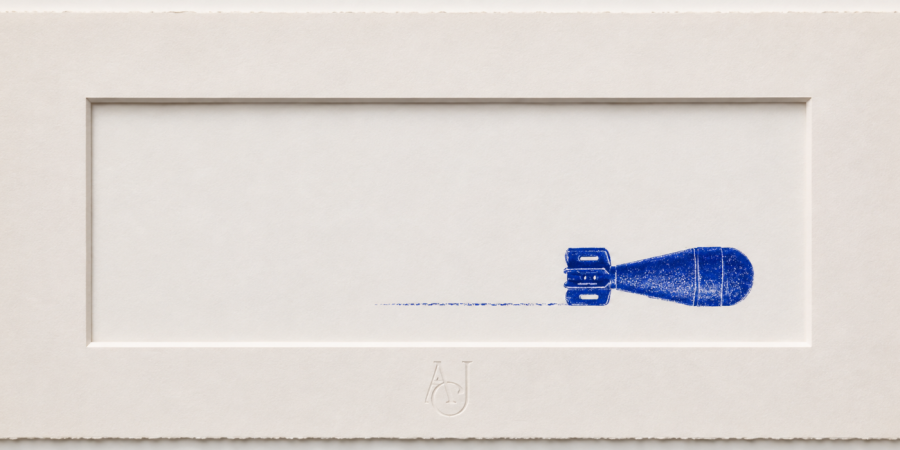
Ashraf Johaardien: A short meditation on what keeps moving.
Weather.
Changes.
The sky remains.
From the terrace I watch the mist roll in over the lake. The smell of coffee mingles with chocolate muffins from the oven, wakes up my senses before the bitter bite of the caffeine lands and wakes me. My husband has been up early. Nothing new. I have been brokering with the snooze button for nearly an hour and now it’s time to get the kids up.
Eat. Check the weather. Sunny but cold. Long-sleeved everything. Swimming bag packed last night. Warm onesie for after the water. Lessons are in a heated and covered pool. Teeth. Wash face. Big sister helps little sister with hair. Lunch paraphernalia into school bag. Traffic. Accident. Listen to the radio. Snow flurries reported. We arrive at the school. My eldest asks if it will snow here. The youngest says she’ll build a snowgirl if it does. Drop off. Kiss goodbye.
Messages.
Calls.
Emails.
I clear my head on the balcony. The lake is clear now. Quiet. Unlike my thoughts. No sign of spring yet. I can see all the way across the water through the bare branches.
Something is different about this winter. I live here. I know what this season is supposed to feel like. This is not it. Persistent rain. Freezing winds that arrive with a kind of insistence, not weather passing through but weather settling in.
The city sits high enough that snow can happen. It just almost never does. July 2023. August 2012 before that. Historical anomaly is the phrase people use, as though naming the exception will contain it.
And not just here. The whole country has been freezing. Snow hitting the Eastern Cape, KwaZulu-Natal, the Free State. Mountain passes blocked. Schools closed. The kind of cold that makes the news because it is not supposed to be possible.
Some forecasts for 2026 predicted a warmer winter than usual. I think about those predictions now the way I think about most predictions: with the particular sympathy you feel for something that tried its best and was simply wrong about what was coming.
The forecast says the system is moving away. The sun is coming back.
On my feed, a friend has posted a video from Barcelona. Just over a month ago, marking fifty years since the end of the dictatorship, a helicopter released 100,000 individual poems over the Gothic Quarter.
Not confetti.
Not litter.
Poems.
Printed on paper designed to fall over an area that had been heavily bombed during the Spanish Civil War. In the video people are looking up, reaching up, catching what comes down.
I watch it twice.
The project is by a Chilean collective called Casagrande. I look up the other cities they have done this in. Guernica. Warsaw. Dubrovnik. Berlin. Each one a place where the sky was once the source of the worst thing that happened.
They are not trying to overwrite what happened in those places.
Something about that restraint stays with me longer than the image does.
The sky is the same.
What comes down is different.
The lake stays still.
I read the unemployment number. Official unemployment up from 32.7% to 33.6% in the second quarter of 2026. A third of the labour force. More or less.
In the North West, fourteen suspected illegal miners died when a mine dump collapsed on Monday night. The mountain came down. I read the paragraph twice, the way I watched the Barcelona video twice, trying to locate something that doesn’t move.
The NAC Council was reinstated by the Gauteng High Court at the end of July, after Minister McKenzie dissolved it in May. The order is interim; the review of whether the dissolution was lawful is still to come. My husband was briefly carrying institutional weight nobody had formally assigned. We didn’t talk about it much. It was just present, the way weather is present, felt before it is visible, there in the quality of a silence at the dinner table, in the particular way a person holds a phone.
The Madlanga Commission is still taking evidence. This week Fadiel Adams was due to testify about a 2024 whistleblower report concerning the Crime Intelligence secret-services account. Then, after 9pm on Monday night, the Commission’s evidence leaders received his sworn affidavit and related annexures. His testimony was postponed.
The evidence that doesn’t quite arrive when it is supposed to.
Meanwhile July’s xenophobic mobilisation has left gaps in factories across KwaZulu-Natal. In Newcastle, some employers report losing between twelve and nineteen percent of their workforce. The workers have not come back. The factories are still running, after a fashion, with whoever remained, and the story has already moved down the feed.
The All Blacks beat the Sharks 54 to 0 on Tuesday. Sport has been unusually prominent this week.
The mist came back in the afternoon. I stand on the terrace again, same spot, same lake, same bare branches. The light has shifted. That is the only difference I can locate with any confidence.
I think about face à la mer and realise I’d had the posture right for an hour before I had the phrase for it.
My daughters are home by three. The little one is still damp from swimming, warm in her onesie, telling me something important about a fish she saw through the pool tiles. I hold the detail.
A fish through tiles.
The poems have landed or blown away or been folded into pockets by people in Barcelona who may never read them but carried them home regardless.
Weather.
Changes.
The sky remains.
Ashraf Johaardien writes under the M\e. imprint. He is the Resident Writer at the Fak’ugesi African Digital & Innovation Festival.
Ashraf Johaardien
ashrafjohaardien@me.com
M\e. Creative
http://www.ashrafjohaardien.substack.com
Disclaimer: Artslink.co.za encourages freedom of speech and the expression of diverse views. The views published do not necessarily represent the views of Artslink.co.za.