One Million Views
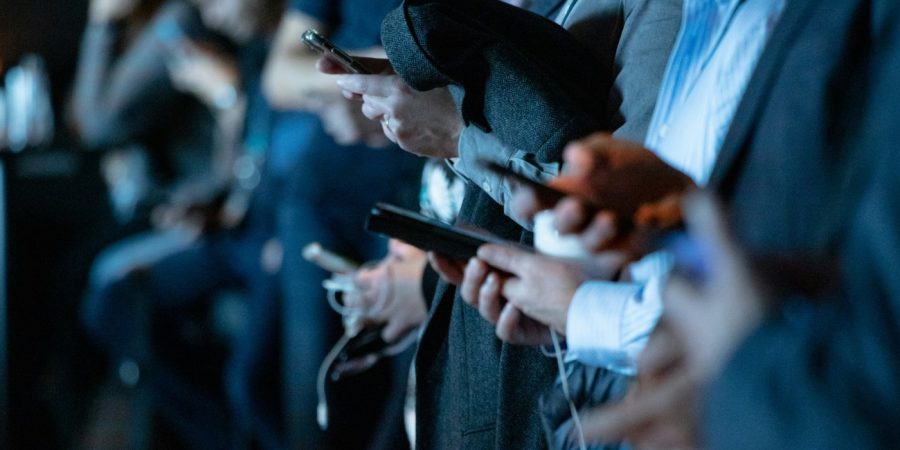
Ashraf Johaardien:A brief meditation on visibility and what it cannot count.
A million views.
I say it the way one states a target in a funding application, and then I hear how little it holds.
A million views is a figure with no room in it. It has no temperature, no sound, and no one sitting across from it. It is what a system returns when it counts how often a screen was touched. I know this, and I still feel the pull of it, or rather, the pull of whatever I imagine it might unlock.
My own numbers are modest. Roughly 950 followers on Facebook, 320 on Instagram and 240 on LinkedIn. The public group attached to the M\e. practice has 6,200 members.
None of these numbers are large, and I do not treat them as a measure of anything. My use of the accounts has changed. For a long time they carried whatever I was working on and whatever image I had caught in a place I happened to be. Now they are a live lab, a place to test an editorial and visual idea in public while it is still unfinished. The people in that lab are not a market. They are closer to a room where people overhear work in progress.
That is why the million matters less to me than it is supposed to. Asked what one million views would mean, I cannot find an answer that survives inspection. I am not chasing income as a direct return on glances, nor influence as a volume of eyes. What seduces me is the quieter possibility that the work might one day pay for itself, and that visibility, if it arrives, might mean the work has found its audience. A million people can look at a sentence without answering it. What I can say is that I would not use my personal accounts any differently. A million views would not change how I post. That tells me the figure is not the goal. It is a placeholder for something I have not yet named.
The group is different. Six thousand two hundred people have joined a room I helped shape. Membership is not participation. It marks a possible community, one that might hold sustained conversations or might never speak at all. More members could mean more people in the conversation, or more people watching a conversation they will never enter. A count cannot tell those apart, and I am not yet sure what growth would mean.
The wider economy has a stake in this confusion. WARC, a marketing intelligence firm, forecast in October 2026 that worldwide advertising spend would reach $1.34 trillion this year, up 11.9 percent. Social media is forecast to take $394.6 billion of that, up 21.3 percent, the fastest-growing channel in its model. These are forecasts of total spend. In the United States, the IAB and PwC report that internet advertising revenue reached $294.6 billion in 2025, up 13.9 percent. That is revenue actually earned by publishers and platforms. Neither figure says what any single artist’s post is worth.
South Africa is smaller, and the data is thinner. The IAB South Africa and PwC report, covering 2023, found internet advertising at 39.8 percent of the overall advertising market, up from 36.1 percent the year before. PwC’s Africa Entertainment and Media Outlook forecasts South African internet advertising revenue reaching R51.7 billion by 2029, growing at 7.9 percent a year. I could not find a current, audited split of local spend between paid social, search and display, and I will not invent one. The share is growing. The breakdown is what I cannot verify.
What does this movement mean for an arts sector that has always depended on being seen? A festival, theatre or independent publisher that once paid a newspaper or radio station to carry its message now has a free account and a boost button. The tools are open. The rules of distribution are not. The platform decides which post reaches whom, and it changes those decisions without notice. The cost of visibility has not fallen. It has moved from a line item the organisation could see to labour the artist performs, unpaid, in the margins of the work.
There is a difference here that the arts sector tends to blur. When an institution transfers its marketing responsibility to the artist, it is shifting a cost. When an artist chooses social platforms as a working tool, the platform becomes part of the practice. The first is a budget decision. The second is a creative one. The danger is that the second is quietly used to justify the first.
This is the tension the number hides. Visibility is a measurable achievement only when someone else does the measuring. The platform counts the look. It does not count the reading, the memory, the question left behind, or the decision to act on something seen. The million is a measure of how many people might look. The more difficult question is what happens when they do. A million views can coexist with no recognition, no conversation and no change. It can also start a relationship that a smaller group, carefully kept, would never have begun.
So I am drawn to the possibility of visibility, and I distrust the systems that sell it to me as a figure. Both positions are honest. The useful work is to stop asking how many and start asking what kind of value the attention is meant to produce, and who decides that. The members of the group who chose to stay may be that value, or they may be the strangers who passed through. I do not yet know which, and the number will not tell me.
Is 52 too old for an OF account?
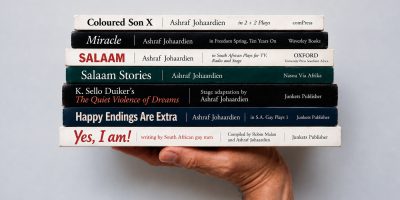
Ashraf Johaardien is a South African writer\artist working across literary, dramatic and visual forms.
Ashraf Johaardien
ashrafjohaardien@me.com
M\e.
http://www.ashrafjohaardien.com
Disclaimer: Artslink.co.za encourages freedom of speech and the expression of diverse views. The views published do not necessarily represent the views of Artslink.co.za.