Mind the Gap
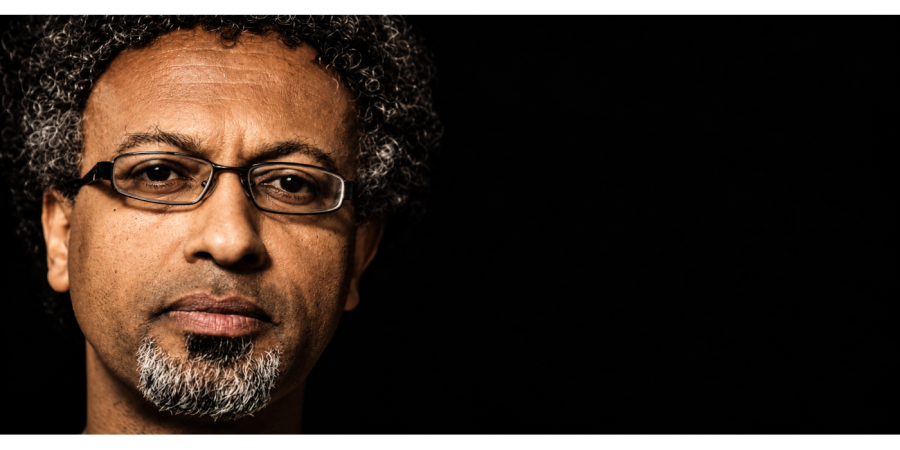
Ashraf Johaardien: Incomplete data is an engineering problem until it decides where a child goes to school.
It is just before five and the birds on the lake are warming up for the morning chorus. I am on the second coffee, reading Sennay Ghebreab’s answers the way I read anything, the first word and then the next, the first sentence and then the next. I do not jump to the end; context gathers that way.
What stays with me as the caffeine arrives is a sense of duty I am not sure I agree with. Why should the job of balancing a model’s training fall to the sample that was overlooked? To the languages that were left out? Maybe we did not want to be part of the machine in the first place. Permission comes before ought.
Ghebreab knows what the gap costs, and he starts with a child.
In Amsterdam, an algorithm matches children to schools. It rests on work that won a Nobel Prize, and it is strategy-proof: a family cannot improve its chances by misstating what it wants. Underneath sits an assumption, that families will try anyway.
He and his colleagues at the Civic AI Lab, University of Amsterdam, looked at what the families do.
“Our research found that, when adequately informed about the risks of misreporting, they have little or no reason to do so.”
For years, the children landed in schools they had not wanted. The algorithm did exactly what it was built to do.
“The lesson is that an algorithm can work exactly as designed and still produce undesirable outcomes when its underlying assumptions fail to reflect people’s realities.”
I know something about that. As a teenager I went from a Coloured high school in South Africa to a boarding school in the UK, and the two were built around very different assumptions about who belonged and whose knowledge counted. It is not the Amsterdam case and I will not pretend it is. But I know the shape of an institution that runs as designed while it fails to see the people inside it.
He sorts incompleteness into three kinds. In the first there is data and no capacity to read it, medical images a system cannot yet make sense of. In the second the data cannot represent reality, and his example is language models that have never met African languages and oral traditions.
“This requires a social intervention: citizens and communities must question the system, identify who or what is missing, and help fill the gaps.”
I keep going back to that sentence. It is the ought, in his own hand.
In the third kind the gap is deliberate. A system is built to gather and hold political or economic power, and a social media platform that prioritises engagement over wellbeing is his example. That one takes collaboration across sectors and change in the system itself.
Read down a little and he is already moving toward my question. Museums earn trust by saying where an object came from, and he wants the same for AI.
“As AI expands across every sector and around the world, data provenance offers an opportunity to change that: from extraction to recognition, and from exploitation to shared ownership.”
“It can help ensure that the people and communities behind the data are not merely resources for AI, but recognized contributors with a say in how their knowledge is used.”
A say in how their knowledge is used. That is closer to permission than to duty.
It costs time, and he says so: putting the community in the room before the system is built slows things down.
“Rushing may save time in the short term but lead to poor outcomes in the long term.”
He reaches for a Kenyan proverb.
“Hurry, hurry has no blessing.”
He speaks first on Thursday, at 10:00 in the Chris Seabrooke Music Hall, on the Imagination Engines frequency. In his account science and development should follow “a cycle of reflection, introspection, imagination and transformation, and then begin again.” Imagination sits third. Two acts of looking at oneself come before it, and the whole thing goes round again.
He has been reaching for African proverbs, to test how AI gets designed, built and used. “Until the lion learns how to write, every story will glorify the hunter,” he says, is a Nigerian one, and I hear the model in it before I hear the lion. Wisdom, says a Ghanaian one, is like a baobab tree, and no one individual can embrace it. The Ethiopian one comes from the country where he was born.
“You cannot wake someone who is pretending to be asleep.”
He says only recently did he see how the three speak to the kinds of incompleteness. The Kenyan goes with the first kind, the Nigerian with the second, the Ghanaian with the third. Together they leave us unable to reflect, look inward, imagine or change. The Ethiopian proverb belongs to that outcome. Institutions, he says, “do not want to see that we are failing” at reflection and introspection.
Beneath it all is Paulo Freire, author of Pedagogy of the Oppressed. Ghebreab’s research group, Socially Intelligent Artificial Systems, works between two cycles he takes from him.
“How can we develop AI that helps move us from the Cycle of Oppression to the Cycle of Liberation?”
“The Cycle of Oppression reproduces a status quo driven by power, profit, competition, greed and fear. The Cycle of Liberation points towards a more conscious society grounded in equity, dignity and compassion.”
The question he would have a citizen, a funder or a ministry ask before trusting any system has nothing to do with accuracy or profit.
“What kind of society does this system help create, and whose interests does it serve? The discomfort this question provokes is important. It may be the beginning of the reflection and introspection needed for genuine transformation.”
“If we want AI to work for people, we must take the time to reflect, listen and imagine together before we transform.”
What counts is who gets asked before the gap is filled.
Ashraf Johaardien is the Writer in Residence at the Fak’ugesi African Digital & Innovation Festival 2026.
Ashraf Johaardien
ashrafjohaardien@me.com
M\e. Creative
http://www.fakugesi.co.za
Disclaimer: Artslink.co.za encourages freedom of speech and the expression of diverse views. The views published do not necessarily represent the views of Artslink.co.za.