Other Matters
Ashraf Johaardien: On hiding in plain sight, or how two ordinary words can hide abuses of process.
I sit in a board meeting.
The agenda has been circulated a week in advance. Nothing unusual in it. Reports to receive. Budgets to approve. The ordinary weather of institutional life.
Then, at the start, an item appears that was not on the agenda. It is listed as a matter for discussion, under other matters. I am asked to excuse myself. No explanation given. I leave the meeting.
My office is quiet. I remember the quiet more than anything else.
What happens in that room, I cannot tell you. I was not in it. What I can tell you is the phrase. Other matters. Two words doing the work of a hinge. Everything that follows gets to walk through disguised as something else.
This is not a story about me. It only starts there.
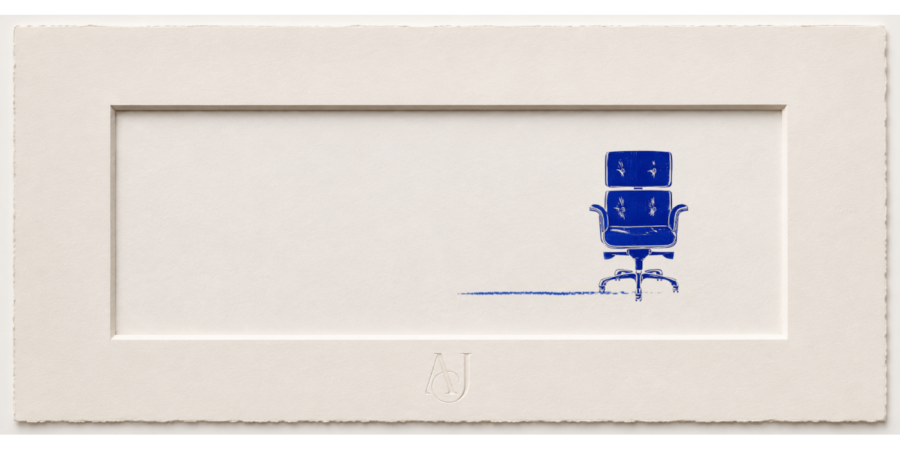
Every institution has a version of that phrase. A line item added late. A name mentioned once and never minuted. A chair, pushed back from the table, its occupant sent to wait for a decision he will only ever meet afterward, as a headline. The chair does not need to stay empty for long. A moment is enough. In that minute the institution has already told you what it is.
I think about this now because a different chair is empty in a different room, at a much larger scale.
A judicial commission is currently hearing testimony into criminality and political interference within the criminal justice system. It will never once say the words theatre, museum, or festival. It does not need to. I am not interested here in what the Commission concludes. I am interested in what it has already revealed without concluding anything, which is that other matters, spoken quietly enough, in a room controlled tightly enough, can rearrange a country the way an agenda item rearranges a meeting. The Commission is not my subject. It is the room next door, and the wall between us is thinner than anyone in the arts likes to admit.
Public funding for the arts does not float above governance. It sits in boardrooms, around tables, and depends on who is present when decisions are made, and who has already been asked to wait outside. A national arts council answers to a department. A department answers to a budget. Every chain eventually arrives at a room. Every room eventually arrives at a chair.
Trust does not erode at the centre and stay there. It moves the way water moves, along the grain, out toward the edges. A donor reads about a chair emptied without explanation in one institution and quietly recalibrates their confidence in another. A corporate sponsor, already cautious, asks one more question than it used to. An international partner wants to know not just where the money goes but who is in the room when it is allocated, and whether that room has a habit of asking certain people to leave it. None of this requires a single cultural institution to be named. The chair requires no invitation. Every institution already owns one.
I keep returning to my office that afternoon. Not because I am owed an answer about what happened in that room. I have made a kind of peace with not being owed one. I return to it because that quiet is where the actual mechanism lives, not the vote, if there was one, which took two minutes, but the waiting, and the specific quality of not knowing what is being decided about you while it is decided.
A commission can hear testimony for three hundred days and never turn toward a small arts organisation raising money for a touring production. It does not need to. The chair it is describing is the same chair. Every publicly funded institution in this country now has to sit with a version of the question the Commission keeps circling without asking directly. Who was in the room. Who was asked to leave it. What was filed, that day, under other matters, and what did it turn out to actually be.
I do not know what the hearings will produce. Perhaps a stronger form of oversight, the kind that sometimes follows a crisis loud enough to make the old arrangement indefensible. Perhaps only the sound of the phrase itself, worn smooth by repetition, other matters, other matters, until it stops registering as a warning at all.
What I know is smaller, and I think more durable than any finding a commission will publish. An institution tells you what it is in the exact minute someone is asked to leave the room. Not before. Not after. In that minute, while the door is still open and no reason has been given yet.
The chair stays empty for exactly as long as it takes everyone else in the room to decide that it should.
After that, it becomes other matters.
“Les Correspondances: On art, culture and public life.” Continue the conversation at *La Période Bleue* on Substack.
© M\e. • 2026
や Ashraf Johaardien writes under the M\e. imprint. He is the Resident Writer at the Fak’ugesi African Digital Innovation Festival.
Ashraf Johaardien
ashrafjohaardien@me.com
M\e.
https://ashrafjohaardien.substack.com/
Disclaimer: Artslink.co.za encourages freedom of speech and the expression of diverse views. The views published do not necessarily represent the views of Artslink.co.za.